Have any question?
Call (402) 514-3210

Call (402) 514-3210

In 2016, tech enthusiasts were stunned to discover an auto repair shop in Gdańsk, Poland, still using a Commodore 64—a computer released in 1982—to run its daily operations over three decades later. While that 8-bit legend is a charming testament to hardware durability, relying on outdated applications in a modern business environment is a high-stakes gamble. Running legacy software long after its official manufacturer support date may seem economical as long as basic daily tasks still run, but it quietly opens the door to serious digital vulnerabilities.

Monitoring every single keystroke might seem like an easy way to guarantee employee output. In practice, invasive surveillance destroys workplace culture, stifles initiative, and drives top talent out the door. Business leaders need a balanced framework that verifies progress without compromising trust.


When your business technology is running smoothly, it is completely natural to look at a recurring IT bill and ask yourself why you are paying for it. In times like these, it is important to shift perspective for a moment and consider what you could very likely need to spend if you weren’t paying for proactive support.

In the early 1900s, structural engineers faced a fascinating dilemma while constructing the world's first skyscrapers: a building could look majestic on the outside, but if the foundation didn’t account for soil shifts and wind load, a single severe storm could bring the whole edifice down.
The exact same principle applies to modern business. When an enterprise starts gaining traction, that initial growth phase feels exhilarating. Revenue surges, teams expand, and new clients pour in. Yet beneath the surface, a quiet, structural danger begins to take root.
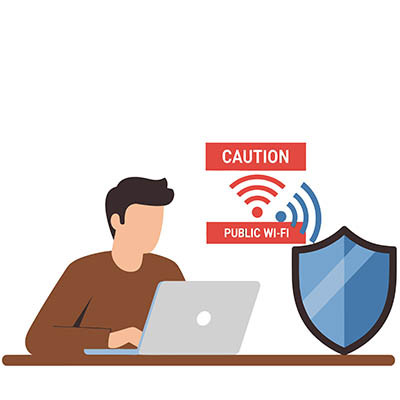
Walk into any coffee shop, hotel lobby, or airport lounge, and you’ll see all manner of professionals hunched over their laptops, sipping lattes and responding to emails. The kind of flexibility that technology offers makes working anytime, anywhere tempting, but it can also be dangerous. This is especially true if your only options are public, free wireless networks.
While it might sound like we’re being paranoid, trust us when we say it’s easier than ever to get caught up in an unexpected security situation while navigating public Wi-Fi. Here’s why.
Adding new software applications to a business workflow often reduces productivity instead of increasing it. When an organization introduces multiple tools without a clear strategy, employees face constant notifications, disruptive updates, and fragmented processes.
This systemic overload leads directly to tech fatigue. It decreases efficiency across the entire organization, leaving your team mentally drained.

The traditional break-fix IT model forces small business owners to view technology expenses as a series of unpredictable, expensive emergencies. Under this setup, you only pay a technical provider when something actively stops working. While this reactive approach looks logical on paper, it introduces severe financial volatility to your monthly cash flow, disrupts daily operations, and completely derails your long-term business planning.

We’re sure you’ve felt the mid-afternoon slump—you know, the one after you’ve just gotten back from the Chinese buffet and you’re having a hard time staying awake. Your technology experiences this, too, after a couple of months of heavy use. Where once your laptop felt snappy, it now feels sluggish. Fans spin louder, apps take longer to load, and the battery drains before you’ve had your second cup of coffee. What gives?
Nowadays, it seems like everyone and everything is stuffing AI wherever they can… and while this can be escaped to some degree at home, nowhere does artificial intelligence seem more deeply embedded than in the workplace.
Of course, as with any technology, AI can reach a point of diminishing returns. Let’s talk about how to identify that point and, more critically, how to avoid encountering it.
Negotiating an IT contract is often the most overlooked step in an SMB's technology journey. Many owners focus strictly on the monthly price, inadvertently leaving their business exposed to hidden fees, slow response times, and "vendor lock-in." To build a sustainable partnership, your contract must be a balanced document that rewards proactive management and provides clear accountability for your bottom line.

Every day, your business is a data-producing machine. Your staff is firing off emails, drafting contracts, updating customer spreadsheets, and saving financial reports. This data isn't just a byproduct of your hard work; it’s the actual engine that keeps the lights on.
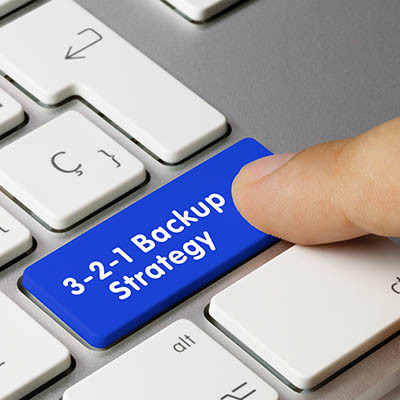
Most business owners I meet have a backup plan. In the worst situation, it's a lone external drive humming in the corner or a basic cloud sync. While these are good first steps, they often harbor a hidden danger: a single point of failure. If your office faces a fire, that external drive is toast. If a staff member accidentally wipes a folder and it instantly syncs to the cloud, your data could vanish before you even realize it's gone. To build a strategy you can actually sleep on, we use the 3-2-1-1 Rule.

Typically, when we make a mistake in a word processor, we just hold down the Backspace key until you get rid of the error, but when you consider all the times you have to hold down the key for longer than five seconds, that time adds up. To bypass this inefficiency entirely, you can use a little tool called “Fast Delete.” Here’s how it’s done.

The biggest security risks to your business often come from within your own office. This doesn’t mean your employees are criminals; in fact, the problem usually starts because your staff is hardworking and helpful.
When people are determined to do a great job, they often develop habits that unintentionally put your data at risk. Here is how that happens and what you can do to fix it.

Does your leadership team follow the same security rules as everyone else, or are there special exceptions made for the executive suite? One of the most dangerous vulnerabilities in a business is the CEO who’s too busy to adhere to the multi-factor authentication policy or who insists on having administrative access to every file in the company. This is precisely why cybercriminals target high-level executives; the likelihood that they have access to data they shouldn’t is much higher than the average employee.

Most people treat office tech like a kitchen appliance: if it turns on, it’s "fine." But in business, a computer becomes a problem long before it actually breaks.
When you wait for a total failure, you aren’t saving money. You’re paying for lost productivity, emergency rush fees, and the risk of losing your data.

Running a small business is a lot like spinning plates while riding a unicycle. It’s exhilarating, but the moment one plate wobbles, the whole act is at risk. While many entrepreneurs worry about the big economic crash, the truth is that most businesses don't fail because of the economy—they fail because of internal operational leaks.

Accessibility is a major topic in modern technology, as it benefits everyone involved. Not only does it allow a team member to participate productively in the workplace without obstacles, but it also gives an employer access to a wider talent pool.
One such tool (or toolkit, really) is built directly into Microsoft’s productivity software as the Word Accessibility Assistant. Much more than spellcheck, it helps ensure your documents can be absorbed by as many people as possible.

The walls of Troy didn't crumble under brute force; they opened from the inside. By the time the Trojans realized their gift was a hollow shell filled with Greek soldiers, the decade-long siege was over in hours.

How often do you find your day, meant to be spent on running your business, instead being spent on keeping your business running? How frequently do you see your day being eaten away by all the minor issues and interruptions that arise?
If your answer is any more often than “rarely, if ever,” you have a problem.
Get the Knowledge You Need to Make IT Decisions
Technology is constantly evolving, and keeping up can feel overwhelming. Whether you want to understand cybersecurity threats, explore automation, or learn how regulations like PCI DSS impact your business, we’ve made it easy to access clear, straightforward insights on key IT topics.
Learn more about what Cambium Data can do for your business.
Cambium Data
6542 South 118th St Omaha NE 68138
Omaha, Nebraska 68138